


Relative pressure sensors from DDM Sensors are designed for applications with limited installation space, clear interfaces, and stable signal quality. The PV25, PX25, PV22, PV22H, PV22 TEDS, PV15H, and PV10 product lines cover compact OEM systems as well as industrial measurement tasks with defined pressure ranges, matching process connections, and application-specific output signals.
Overview of Our Relative Pressure Sensors
DDM Sensors develops miniaturized relative pressure sensors for compact assemblies where the measurement range, connection geometry, and electrical interface must match precisely. Depending on the series, various pressure ranges, temperature windows, output signals, and process connections are available. This allows the sensors to be targetedly integrated into OEM architectures, test benches, pneumatic systems, and mobile applications.
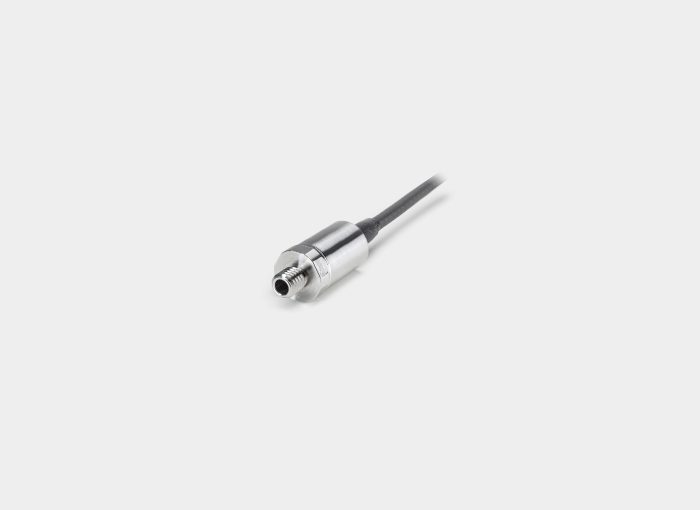
excl. 19% VAT plus shipping costs
Ø: 10 mm
Measurement range: 5 bar to 250 bar (Any ranges in between)
Output: 0,5 to 4,5 V
Comp. Temperature Range: -40°C to +180°C
Pressure connection: M5x0,8
Datasheet : pdf | 167 KB
excl. 19% VAT plus shipping costs
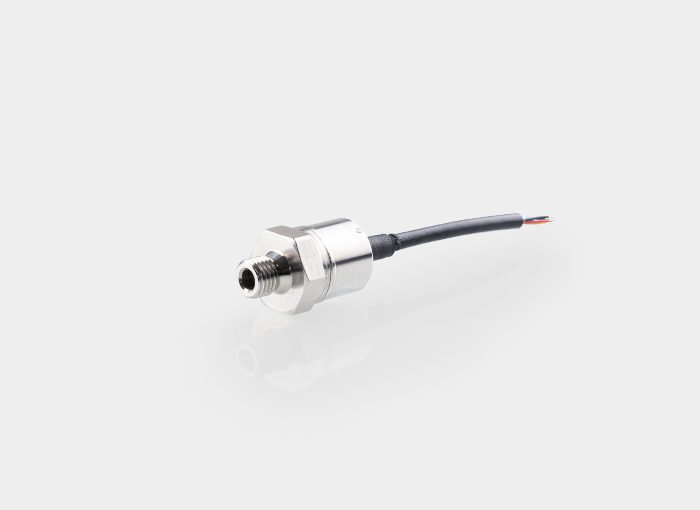
excl. 19% VAT plus shipping costs
Ø: 16 mm
Gauge pressure: (-1) 0…2,5bar to (-1) 0…150 bar (Any ranges in between)
Absolute pressure: 0…2,5bar to 0…150 bar (Any ranges in between)
Output: 0,5 to 4,5 V
Comp. Temperature Range: -40°C to +150°C
Pressure connection: M6x1; M8x1 (Others on request)
Datasheet : pdf | 374 KB
excl. 19% VAT plus shipping costs
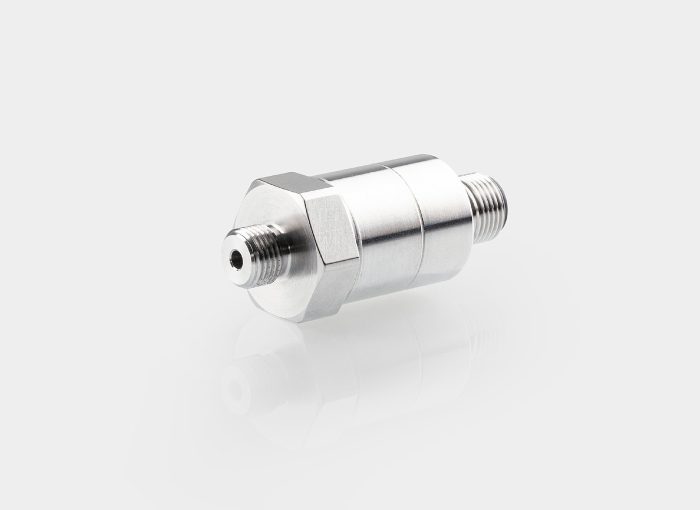
excl. 19% VAT plus shipping costs
Ø: 22 mm
Gauge pressure: 100 mbar to 150 bar (Any ranges in between; Bidirectional)
Absolute pressure: 2 bar to 150 bar (Any ranges in between)
Output: 0 to 5 V or 1 to 6 V
Comp. Temperature Range: -40°C to +125°C
Pressure connection: M10x1; M14x1,5; 7/16 – 20UNF; G1/4 male; Rectus 21
Datasheet : pdf | 271 KB
excl. 19% VAT plus shipping costs
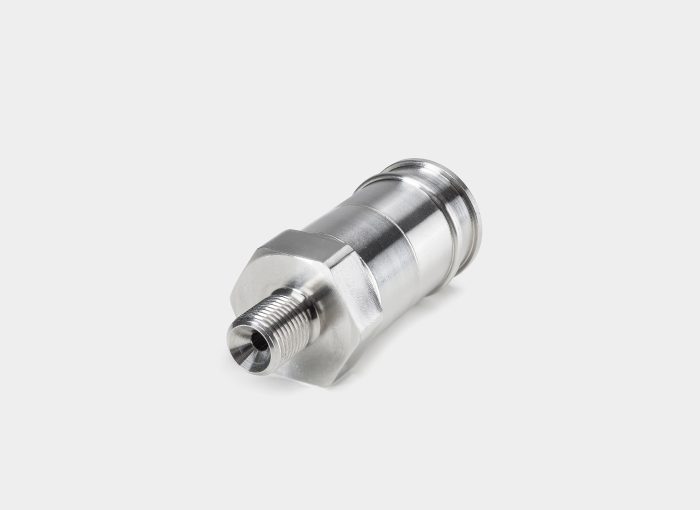
excl. 19% VAT plus shipping costs
Ø: 22 mm
Gauge pressure: 100 mbar to 150 bar (Any ranges in between ;Bidirectionall)
Absolute pressure: 1 bar to 150 bar (Any ranges in between)
Output: 0 to 5 V or 1 bis 6 V
Comp. Temperature Range: -40°C to +125°C
Pressure connection: M10x1; M14x1,5; 7/16 – 20UNF; G1/4 male; Rectus 21
Datasheet : pdf | 252 KB
excl. 19% VAT plus shipping costs
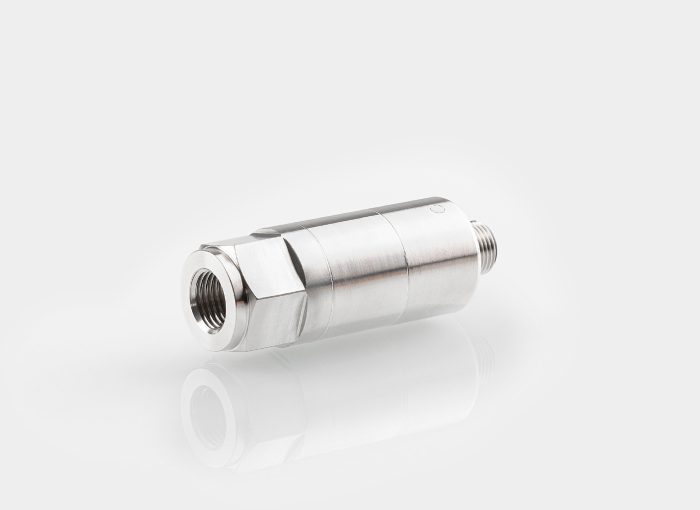
excl. 19% VAT plus shipping costs
Ø: 25mm
Gauge pressure: 100 mbar to 150 bar (Any ranges in between;Bidirectional)
Absolute pressure: 250 mbar to 150 bar (Any ranges in between)
Output: 0 to 5 V or 0 to 10 V
Comp. Temperature Range: -20°C to +80°C
Pressure connection: G1/4″ female, G1/4″ male to DIN 3852 T11 seal incl.
Datasheet : pdf | 293 KB
excl. 19% VAT plus shipping costs
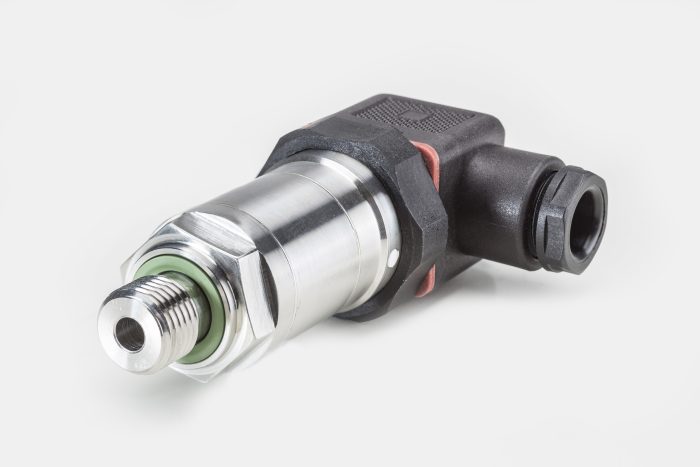
excl. 19% VAT plus shipping costs
Ø: 25 mm
Gauge pressure: 100 mbar to 150 bar (Any ranges in between; Bidirectional)
Absolute pressure : 250 mbar to 150 bar (Any ranges in between)
Output: 4 to 20 mA
Comp. Temperature Range: -20°C to +80°C
Pressure connections: G1/4″ female , G1/4″ male to DIN 3852 T11
Datasheet : pdf | 283 KB
excl. 19% VAT plus shipping costs
Precise Relative Pressure Measurement in Minimum Space
Key advantages of our relative pressure sensors:
- Miniaturized designs for tight installation situations and OEM integration
- Wide selection of relative pressure ranges for various system pressures
- Analog output signals for direct processing in control units and evaluation systems
- Multiple process connections for mechanical integration into compact assemblies
- Engineered for industrial applications with stable measurement values and reproducible signal transmission
Technical Specifications and Product Features
Technical Specifications at a Glance
| Series / Product | Pressure Range | Temperature Range | Output Signals | Process Connections |
| PV10 | 0 to 10 bar to 0 to 1000 bar | −40 °C to +150 °C −40 °C to +180 °C | 0.5 to 4.5 V | M5x0.8, M6x1, M10x1 |
| PV15H | (−1) 0 to 2 bar to (−1) 0 to 250 bar, custom intermediate ranges | −40 °C to +150 °C | 0.5 to 4.5 V | M6x1, M8x1, M10x1 |
| PV22 | 100 mbar to 250 bar, custom intermediate ranges | −40 °C to +125 °C | 0 to 5 V, 1 to 6 V | M10x1, M14x1.5, 7/16-20 UNF, G1/4 male, Rectus 21, custom |
| PV22H | 100 mbar to 250 bar, custom intermediate ranges | −40 °C to +150 °C | 0 to 5 V, 1 to 6 V | M10x1, M14x1.5, 7/16-20 UNF, G1/4 male, Rectus 21, custom |
| PV22 TEDS | 100 mbar to 250 bar, custom intermediate ranges | −40 °C to +125 °C | 0 to 5 V, 1 to 6 V | M10x1, M14x1.5, 7/16-20 UNF, G1/4 male, Rectus 21, custom |
| PV25 | 100 mbar to 250 bar, custom intermediate ranges | −20 °C to +80 °C (0 °C to +60 °C) | 0 to 10 V | G1/4” male, G1/4” female |
| PX25 | 100 mbar to 250 bar, custom intermediate ranges | −20 °C to +80 °C (0 °C to +60 °C) | 4 to 20 mA | G1/4” male, G1/4” female |
Total Error and Measurement Accuracy
The Total Error Band (TEB) of a relative pressure sensor includes non-linearity, hysteresis, zero point and full-scale offset tolerances, and temperature effects. For machine design, this value is highly relevant as it reflects the real-world measurement deviation across the specified operating range.
Compact Dimensions
The series are optimized for integration into OEM systems where sensors, connection geometries, and cable outlets must fit into confined spaces. The exact dimensions are product- and variant-specific, starting from a diameter of 10 mm and a length of 15 mm. Relevant datasheets apply for specific installation guidelines. Miniaturization reduces mechanical complexity in valve manifolds, test rigs, mobile units, and compact measurement modules.
Applications and System Integration
Field of Application and Industry Focus
Relative pressure sensors from DDM Sensors are used in industrial automation, medical technology, HVAC, test and measurement, as well as aerospace applications. Typical uses include pneumatics, robotics, compact machine modules, and plants with limited spatial freedom. Depending on the model, these sensors are also suited for demanding environments requiring stable relative pressure measurement and clean electrical connection.
Material and Media Compatibility
On the process side, the relative pressure sensors are seal-free and laser-welded. All wetted components are manufactured from 316L stainless steel, providing high resistance to a wide range of media and chemicals. By eliminating process seals, potential limitations caused by elastomer aging or chemical degradation are avoided.
Certifications and Protection Classes
Certifications, standards, and IP protection classes depend on the specific product variant and application scenario. Requirements regarding IP protection, electrical safety, and documentation should be defined early in the engineering phase. DDM Sensors provides assistance in selecting the appropriate model and aligning with customer specifications.
Challenge and Solution for Design Engineers
Challenge: Pressure Measurement in Confined Spaces
In compact machinery and assemblies, sensors, connections, cable outlets, and mechanical guides often compete for the same space. Simultaneously, the pressure range, overpressure resistance, output signal, and temperature performance must match the application requirements. Relative pressure sensors from DDM Sensors address this interface between miniaturization and technical endurance so that pressure measurement can be seamlessly integrated into the overall system without lengthy design iterations.
Solution: Highly Integrated, Miniaturized Relative Pressure Sensors
Our relative pressure sensors combine a compact footprint with application-oriented pressure ranges and compatible electrical interfaces. This allows them to be embedded in OEM architectures, test benches, pneumatic systems, and mobile applications without expanding the mechanical design. For design engineers, selection can be based not only on pressure range but also on connection geometry, output signal, and temperature range.
Product Portfolio and Custom Solutions
Portfolio Overview for Technical Decision-Makers
For technical decision-makers, choosing the right combination of pressure range, temperature window, and electrical interface is key:
- PV22 & PV22H: Ideally suited when a wide relative pressure range reaching into high pressures as well as robust thermal resistance are required.
- PV15H & PV10: Provide optimal solutions for applications prioritizing ultra-compact installation environments.
- PV22 TEDS: Advantageous when fast and error-free parameterization via TEDS is required during system integration.
Custom Relative Pressure Sensors for Your Specific Application
DDM Sensors develops tailored solutions upon request when standard configurations do not fully satisfy space constraints, fitting requirements, or signal formats. Customization options include modified pressure ranges, specialized electrical connectors and cable lengths, alternative process connections, and custom calibrations. This flexibility provides a distinct competitive edge in both series production and special-purpose engineering.
Consult Our Experts for Personalized Pressure Sensor Solutions
Contact us for advice on our pressure sensors and to find a customized solution for your individual requirements.

Find the Right Sensor for Your Project
When selecting relative pressure sensors for a specific application, we assist you in evaluating pressure ranges, output signals, connections, and media compatibility. Submit your technical specifications so we can identify the optimal sensor line for your machine, module, or OEM system.
Frequently Asked Questions About Relative Pressure Sensors (FAQ)
Which relative pressure sensors does DDM Sensors offer?
Our core product portfolio includes the PV25, PX25, PV22, PV22H, PV22 TEDS, PV15H, and PV10 series. Variants differ by pressure range, temperature capability, output signal, and process connection.
Which applications are relative pressure sensors best suited for?
Typical application fields include industrial automation, pneumatics, robotics, HVAC systems, test and measurement engineering, and medical technology devices. They are particularly suitable for applications with restricted installation space and strict interface requirements.
Which output signals are available for relative pressure sensors?
Depending on the series, available analog output signals include 4 to 20 mA, 0 to 5 V, 1 to 6 V, 0 to 10 V, and 0.5 to 4.5 V. Selection depends on the downstream controller, processing unit, or signal conditioning hardware.