

To detect even the smallest leakages, high-precision pressure sensors play a decisive role. As your partner for demanding testing tasks, we at DDM Sensors offer the ideal pressure measurement technology for reliable leak testing.
excl. 19% VAT plus shipping costs
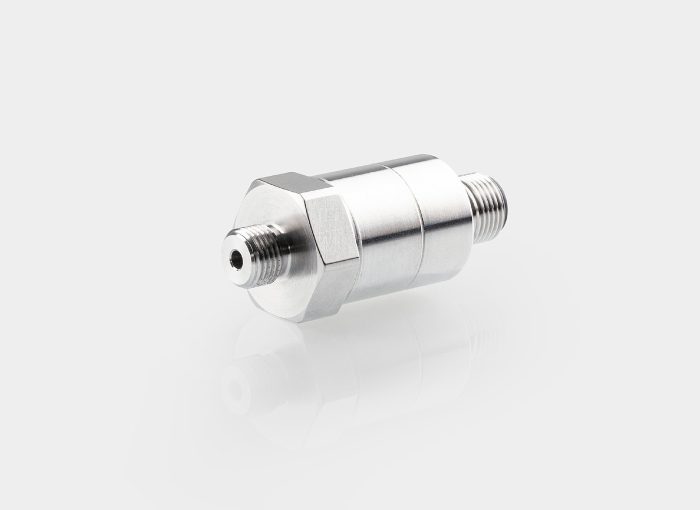
Ø: 22 mm
Gauge pressure: 100 mbar to 150 bar (Any ranges in between; Bidirectional)
Absolute pressure: 2 bar to 150 bar (Any ranges in between)
Output: 0 to 5 V or 1 to 6 V
Comp. Temperature Range: -40°C to +125°C
Pressure connection: M10x1; M14x1,5; 7/16 – 20UNF; G1/4 male; Rectus 21
Datasheet : pdf | 271 KB
excl. 19% VAT plus shipping costs
excl. 19% VAT plus shipping costs
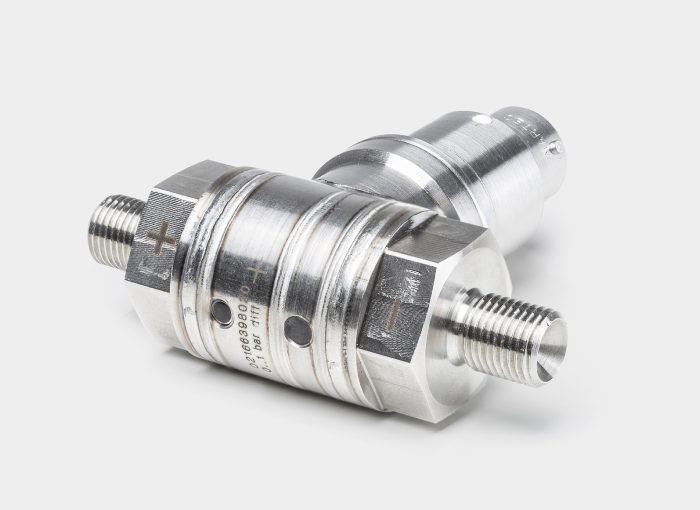
Ø: 27 mm
Measurement range: 100 mbar bis 3,5 bar (Any ranges in between; Bidirectional)
Output: 0 to 10 V or 1 to 6 V
Comp. Temperature Range: -20 to 80°C
Pressure connection: M10x1
Datasheet: pdf | 368 KB
excl. 19% VAT plus shipping costs
excl. 19% VAT plus shipping costs
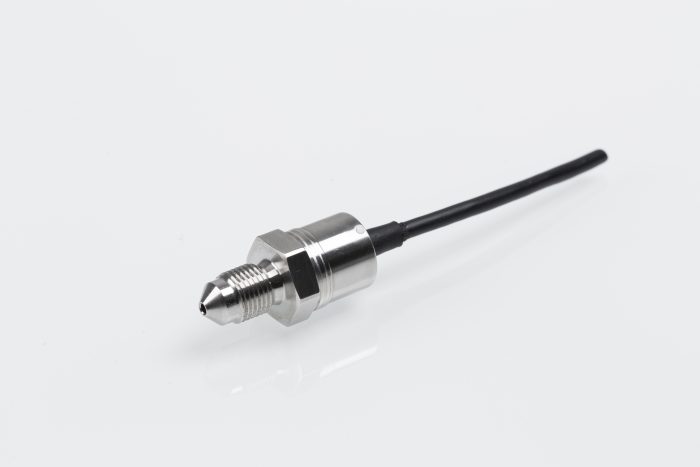
Ø: 16 mm
Pressure Ranges (FRO):: 0 to 200 bar rel. (others on request)
Overpressure: 300 bar
Burst pressure: 400 bar
Output Signal (3-wire): 0.5 to 4.5 V
Response Time: < 0,5 ms
Operating Temperature Range: −40 °C to +150 °C
Datasheet: pdf | 375 KB
excl. 19% VAT plus shipping costs
How Leak Testing with Pressure Sensors Works
The basic principle of leak testing with pressure sensors is based on the pressure decay method, also known as pressure drop measurement. In this process, the test specimen is pressurized with a process medium, such as dry air or nitrogen. A high-resolution pressure sensor then measures the pressure profile over a defined period of time. A significant drop in pressure within this timeframe serves as a clear indicator of an existing leak.
The Typical Workflow of a Leak Test with Pressure Sensors
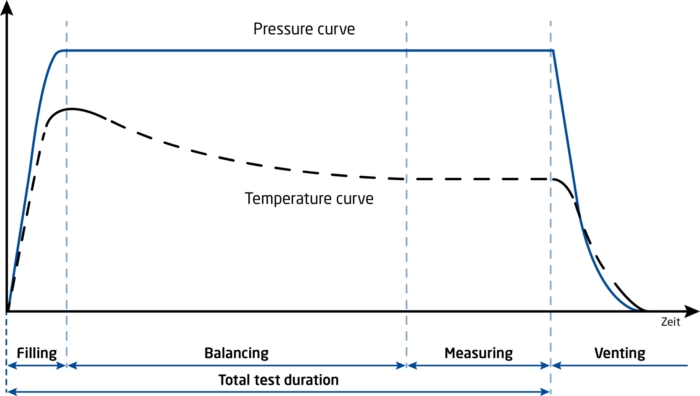
A leak test using the pressure decay method is divided into four clearly defined phases.
- In Phase 1, the test specimen is filled to a defined test pressure.
- This is followed by Phase 2, the stabilization phase, during which temperature equalization takes place between the filled test medium and the component to prevent measurement errors.
- In the actual measurement phase, Phase 3, the pressure sensor records the pressure drop over the predefined measurement time.
- Finally, in Phase 4, the test specimen is vented in a controlled manner.
Selecting the Right Pressure Sensor for Leak Testing
Crucial factors for choosing the correct pressure sensor for leak testing are high measurement accuracy and resolution to detect the smallest pressure changes. The sensor’s pressure range must be precisely matched to the test pressure. In addition, excellent long-term stability such as that offered by our PV-22 series pressure sensors with ≤ 0,1 per year and sufficient temperature resistance are indispensable for process reliability. Our sensors cover operating and media temperature ranges from -40 °C up to +150 °C (e.g., the PV-15B series).
Measurement Methods for Leak Testing
Gauge Pressure Measurement
In gauge pressure measurement, the pressure inside the test specimen is measured against the ambient atmospheric pressure. This method is outstandingly suited for smaller test volumes and is characterized by high operational reliability. In principle, all of our pressure sensors can be used for gauge pressure measurement. We recommend our standard series PX25 and PV25, models PV22 and PX22 for extended temperature ranges from -40 to 125 °C (optionally 150 °C), and the PV-15 series for applications with limited installation spaces and wide temperature ranges.
Differential Pressure Measurement
Differential pressure measurement is performed by comparing the pressure of the test specimen with the pressure in a tight, sealed reference volume. This procedure is ideal for detecting the smallest leak rates, is suitable for high test pressures, and compensates for temperature influences very effectively. For this demanding measurement task, we offer our specialized differential pressure sensors of the PV2722 and PX2722 series, which cover measuring ranges from 100 mbar up to 3.5 bar.
Application Areas for DDM Pressure Sensors in Leak Testing
Automotive Industry & Powertrain
In the automotive industry and powertrain sector, our sensors secure the quality of critical components. This includes testing engine housings and cylinder blocks for oil and water tightness, checking transmission housings for ATF oil tightness, and verifying cooling circuits including hoses, lines, and radiators. Specifically for braking systems and associated test benches, our brake pressure sensor PV 15B has proven highly effective, designed for pressures up to 200 bar and media temperatures up to +150 °C.
Special Purpose Machinery & Automation
In special machinery construction and automation, our pressure sensors are deployed in automated End-of-Line (EOL) testing systems and for the inline inspection of series production parts. Their high reliability also makes them an ideal component for calibration systems. Thanks to fast response times of under 0.5 ms, as featured in our PV-15 and PX-22 series, they are perfectly suited for fast cycle times in automated processes.
Hydrogen & Energy Technology
In the field of hydrogen and energy technology, our pressure sensors are used for leak testing fuel cell stacks, particularly in the anode path, as well as hydrogen lines and components. The wetted materials made of high-quality stainless steel (1.4404, 1.4435) guarantee the necessary resistance required for long-term tests with aggressive media such as hydrogen.
General Industrial Applications
Furthermore, our pressure sensors find use in numerous general industrial applications. They are used for leak testing in the chemical industry, for testing tasks in high-temperature environments, and for general quality control in a wide variety of production processes to ensure product quality through reliable leak testing.
DDM Sensors as Your Partner for Precise Leak Testing with Pressure Sensors
At DDM Sensors, we possess long-standing expertise in pressure measurement technology and stand for the highest product quality and reliability. We develop application-specific solutions that are tailored exactly to your requirements.
Get Expert Advice on Leak Testing with Pressure Sensors Now
Request a non-binding consultation now and receive a custom quote for your leak testing project with pressure sensors.
Consult Our Experts for Personalized Pressure Sensor Solutions
Contact us for advice on our pressure sensors and to find a customized solution for your individual requirements.